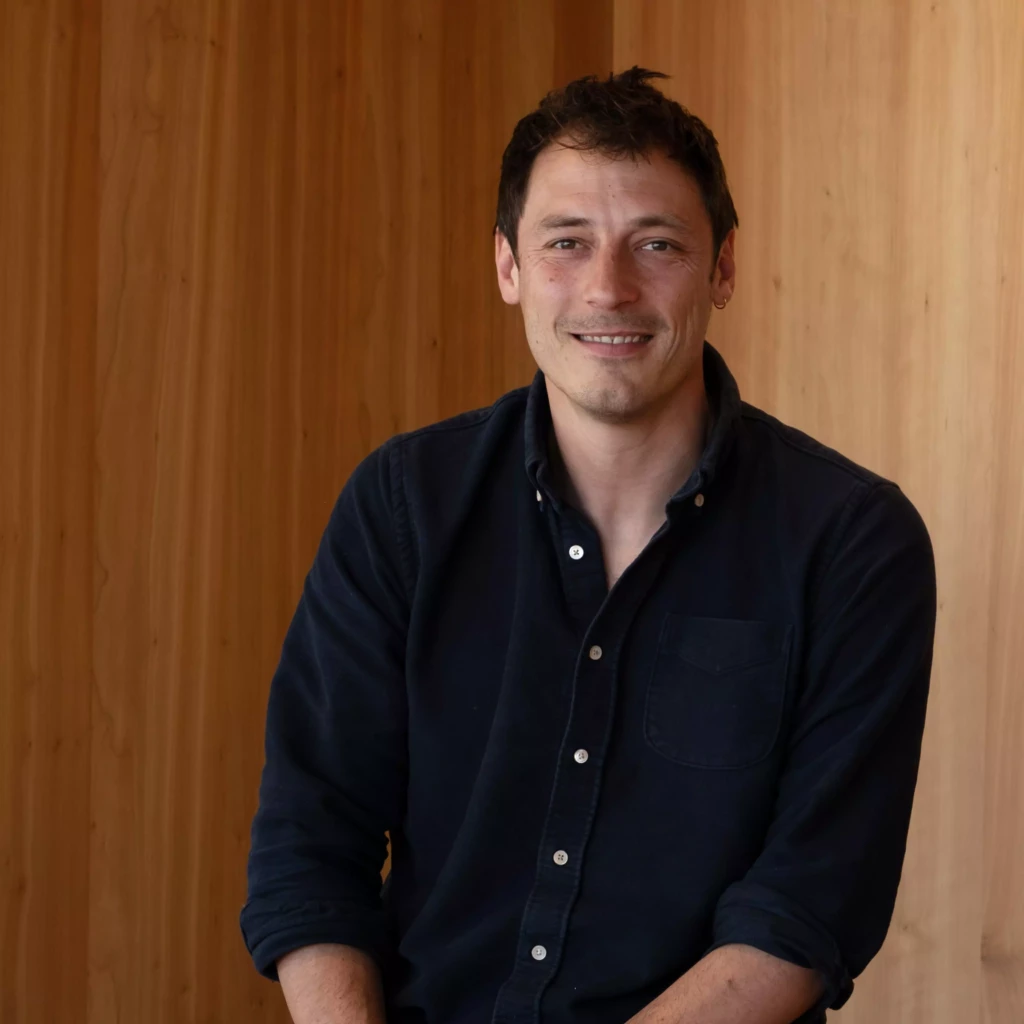
Photo: À Haute Voix, where Max talks about shared energy communities in a podcast (in French).
Max Boutsen has been running RaYSun's operations for three years. Before diving into energy sharing, he helped Dott grow from a local start-up into a micromobility scale-up with a footprint across Europe. It is with that operator's eye, forged in hypergrowth, that he tackles one of the most debated topics of the moment: the battery. Interview.
Max, three years at the heart of energy communities: which topic keeps coming back?
“If there is one subject that has stirred passions from the start, it is the physical battery. It was sold to us as the absolute revolution. And the change is real, no argument there. But today the market is finally finding its balance.”
Meaning? Where does that market stand?
“The reality: battery prices have come down, yes. But the complexity of grid connection is still very real. And the gains tied to market volatility have shrunk. So while some hesitate, apply for permits or wait for their connection to be approved… we often forget that another option already exists.”
That other option is what you call the “virtual battery”?
“Exactly. A giant battery, invisible and immediately available: the grid. That is the whole principle of the virtual battery through energy communities. Instead of storing your kWh in a box at home, you inject them directly at your neighbour's — someone without solar panels who is consuming at that precise moment.”
Who is this approach for?
“What I love about this approach is that it speaks to everyone, whatever your relationship with the battery:
- You don't want a battery? It is a perfect alternative, without the slightest hardware investment.
- You are waiting for your battery? It is the ideal transition to monetise your surplus within a few weeks, without losing a month of production.
- You already have a battery? It is the perfect complement to absorb and monetise the injection surplus that even your box can no longer store.”
And financially — does the neighbour win too?
“That is the best part: you sell your electricity to your neighbour for less than the grid tariff, while getting more value for yourself than with classic injection. Everybody wins, and the energy stays in the neighbourhood.”
So the energy community replaces the battery?
“No, and that matters: the energy community does not come to replace the physical battery. It comes to fill the gap, speed things up and optimise the whole. It is pragmatic, it is available right now, and it puts meaning back into the local grid.
In your energy strategy, had you thought about combining the two?”
To find out what your surplus — or your needs — would represent in a sharing operation, the RaYSun simulator gives you a first order of magnitude in two minutes, on your real volumes. And to hear more from Max, his episode of the À Haute Voix podcast is online.