By installing solar panels, the co-ownership creates a virtuous circle: it recovers its investment quickly through local resale, occupants save on grid fees, and the profits feed the reserve fund for energy renovation. RaYSun handles the whole chain, from the potential study to the daily management of the sharing.
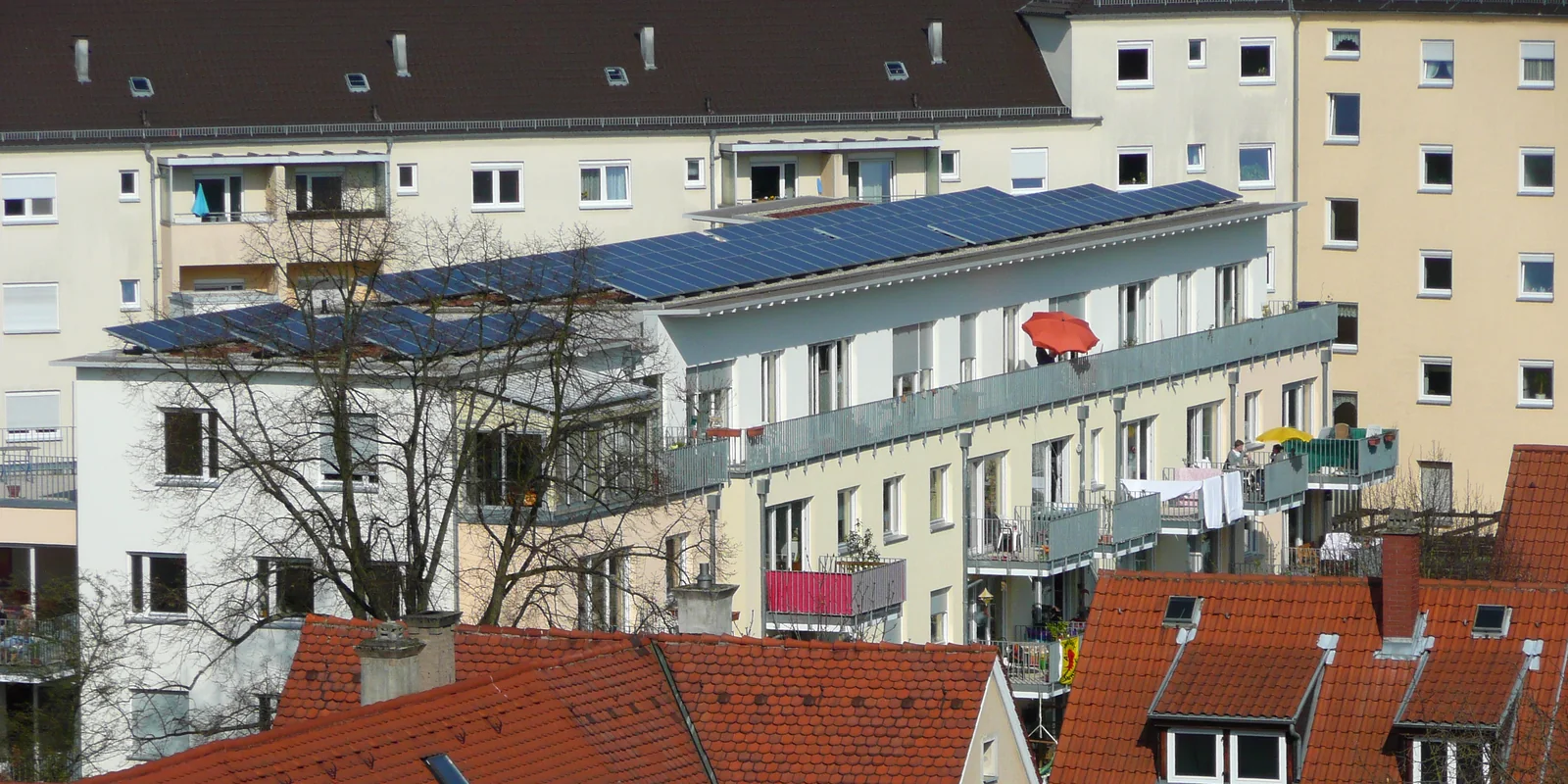
An apartment building combines everything that makes a sharing operation efficient: a large, often unused roof, dozens of meters behind a single connection, and varied consumption profiles that complement each other through the day. And the sharing follows a simple sequence, repeated every year.
The installation is decided at the general meeting and carried by the co-ownership. The common areas directly self-consume part of the electricity produced: lifts, lighting, boiler room, ventilation. The rest is resold locally to occupants, at a price above the injection tariff: that is what shortens the payback.
Each co-owner or tenant receives a share of the roof's energy, at a rate below their supply contract, without changing supplier and without installing anything at home. In Wallonia and Brussels, energy shared within the building also benefits from a reduction in grid fees on the quantities exchanged: the roof's kWh costs less, grid included, than the supplier's kWh.
Local resale revenue goes back to the co-ownership. Once the installation is paid off, it feeds the reserve fund and finances the next steps of the building's energy renovation: insulation, boiler, charging points. The roof pays for the next works.
RaYSun deals with the building manager (syndic), and with them alone. We run the operational phase: allocation keys, permits, flow monitoring, members joining and leaving. Each month and at year end, the manager receives from RaYSun the shared volumes per unit and the amounts to invoice, which they integrate into each co-owner's electricity charges statement, as they already do for the building's other charges.
A single investment, the co-ownership's, decided at the general meeting. No co-owner or tenant has panels to install, a meter to change or an individual contract to manage with RaYSun. Participation in the sharing remains voluntary, unit by unit.
One contact from the first diagnosis to monthly invoicing. Here is exactly what we take care of.
Roof analysis (usable area, orientation, shading, condition of the covering, connection) and a first estimate of the installable capacity and expected annual production.
From the units' real consumption profiles, we simulate quarter-hour by quarter-hour the energy exchanged between the roof and each meter. You get the investment for the co-ownership, its return, and the annual gain of each member of the sharing operation, before any decision.
Drafting of the installation specifications, consultation of partner installers, help choosing the offer at the general meeting, then site supervision through to acceptance and commissioning.
Creation of the operation within your Region's energy community (CityWatt in Brussels, WalloWatt in Wallonia), drafting of agreements, allocation key approved by the co-owners, enrolment of each participant.
File with the competent energy regulator (Brugel in Brussels, CWaPE in Wallonia) and procedures with the distribution grid operator (Sibelga, ORES or RESA) until the sharing is activated on the meters.
Energy flow monitoring, invoicing of shared energy to the building manager, who passes it on to each co-owner with the annual statement, management of members joining and leaving on sales or tenant changes. Each member follows their exchanges online on My Community, the sharing monitoring platform, from the month down to the quarter-hour.
Going further:
No. The installation is decided by the co-ownership, but participation in the sharing remains voluntary, unit by unit. A co-owner who does not take part changes nothing for the others, and can join the operation later.
RaYSun manages members joining and leaving as changes occur. The new occupant can take over the unit's share, and the allocation key is updated without a new general meeting.
The building manager, RaYSun's single point of contact. They receive the shared volumes per unit and the amounts to invoice, and integrate them into each co-owner's electricity charges statement, in the usual statement. No co-owner has an individual contract to manage with RaYSun.
No. Each participant keeps their supply contract. The energy shared from the roof is deducted, and the usual supplier automatically covers the rest.
We start from what exists. An installation that today only feeds the common areas can, in most cases, be shared with the private units without heavy works. The simulation checks this within a few days.
Send us the building's address, the number of units and, if you have them, a few electricity bills. A RaYSun expert gets back to you within 48 h with a first estimate of the potential and a detailed quote.